
In short
- Porto is best explored over 3 to 5 days. Two days for the UNESCO-listed historic centre, one for Vila Nova de Gaia and the port wine cellars, one or two for the Douro Valley.
- Best time to visit: April-June and September-October (64-79 °F, moderate crowds, Douro harvest in September).
- Indicative budget: €90-150 per person per day excluding flights, in comfortable hotels and local restaurants.
- Must-sees: Ribeira, Dom Luís I bridge, Livraria Lello, Palácio da Bolsa, Gaia cellars, Douro cruise.
- Porto is a walking city: the centre fits within a 2 km radius, complemented by metro and historic trams.
Porto rewards those who slow down. The city wraps itself around the Douro in a natural amphitheatre, layers blue and white azulejos around every corner, and opens its centuries-old cellars on the south bank. A UNESCO World Heritage site, Portugal’s northern capital is best discovered on foot, a glass of port tonic in hand, to the sound of fado and the calm of its cobbled alleys. This complete guide gives you everything you need to plan your stay: when to come, what to see, how long to plan and how to experience Porto like a local, with insider advice from our French- and English-speaking team based on site.
Why visit Porto?
Porto is not a smaller Lisbon. It is another city, another rhythm, another light. Dark granite frames tile-covered facades, seagulls glide above red roofs, and the Atlantic sneaks into the streets the moment you descend to the Douro. Its historic centre, the Ribeira, and the Vila Nova de Gaia cellars have been listed as UNESCO World Heritage since 1996.
Porto charms with its authenticity: less saturated than Lisbon, more confidential, the city remains inhabited by its own people, family-run tascas and artisans. You come for port wine, of course, but also for the Douro, for the cuisine (francesinha, tripas à moda do Porto, bacalhau), for the proximity to the ocean, and for side trips to Guimarães, Braga and the Minho. Plan three days for the essentials, five to feel at home, a week to extend into the Douro and northern Portugal.
The historic centre and the Ribeira, heart of Porto
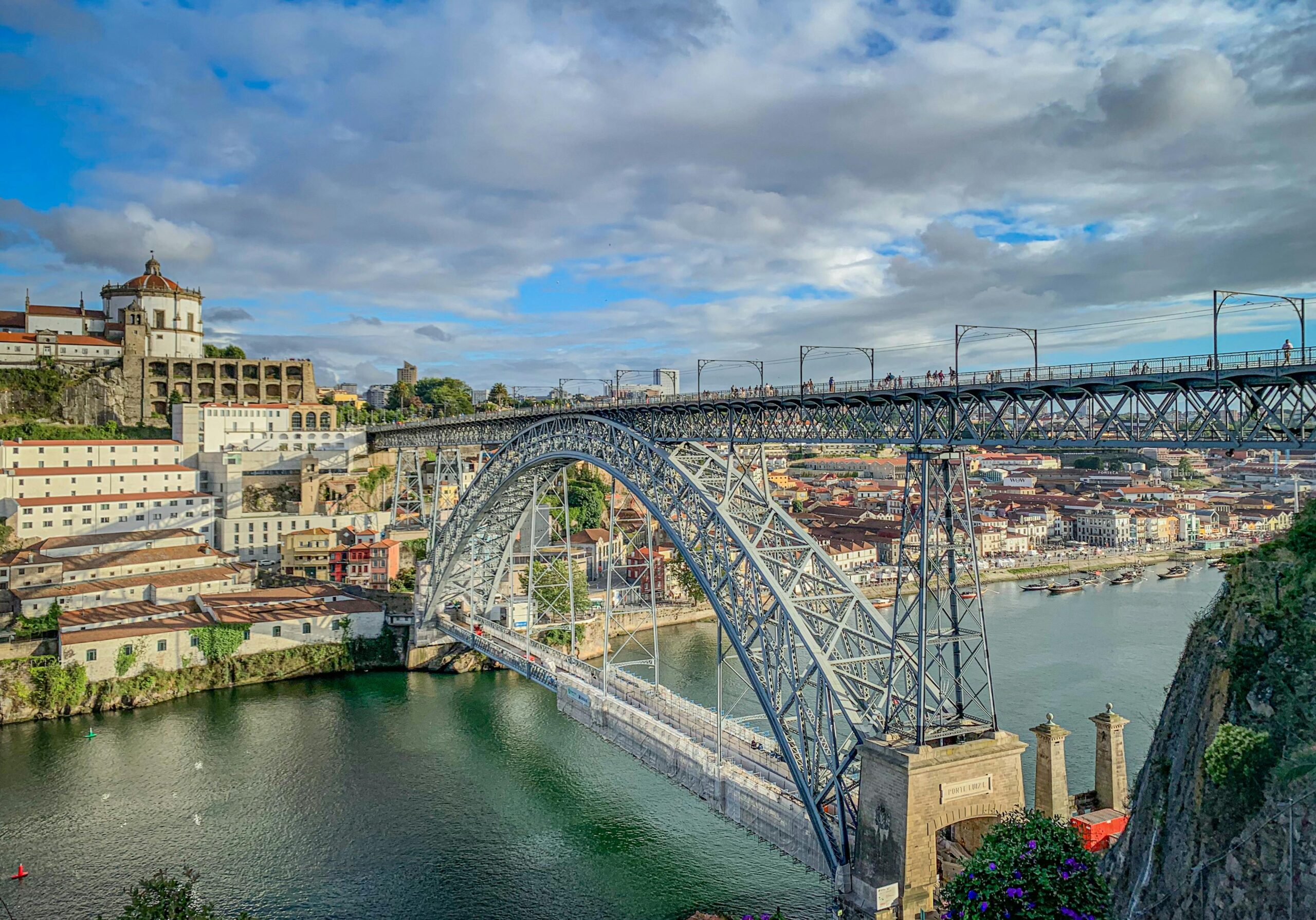
The Ribeira is Porto’s postcard: a cobbled quay, narrow houses with coloured facades, rabelo boats moored on the river and, just across, the silhouette of the Gaia cellars. Start your visit here, preferably in late afternoon when the golden light sets the bricks ablaze and the terraces come alive. Climb the narrow stairs up to the cathedral (Sé), whose terrace offers one of the finest panoramic views of the city.
Then pass through São Bento station with its 20,000 hand-painted azulejos telling the history of Portugal, and reach Avenida dos Aliados, the central square lined with Beaux-Arts buildings. The Clérigos Tower, the pedestrian streets of the Baixa (Santa Catarina, Flores) and the Bolhão market complete this historic heart. Everything fits within a two-kilometre radius that you cover on foot, letting yourself be surprised.
Cultural gems: Livraria Lello, azulejos and palaces
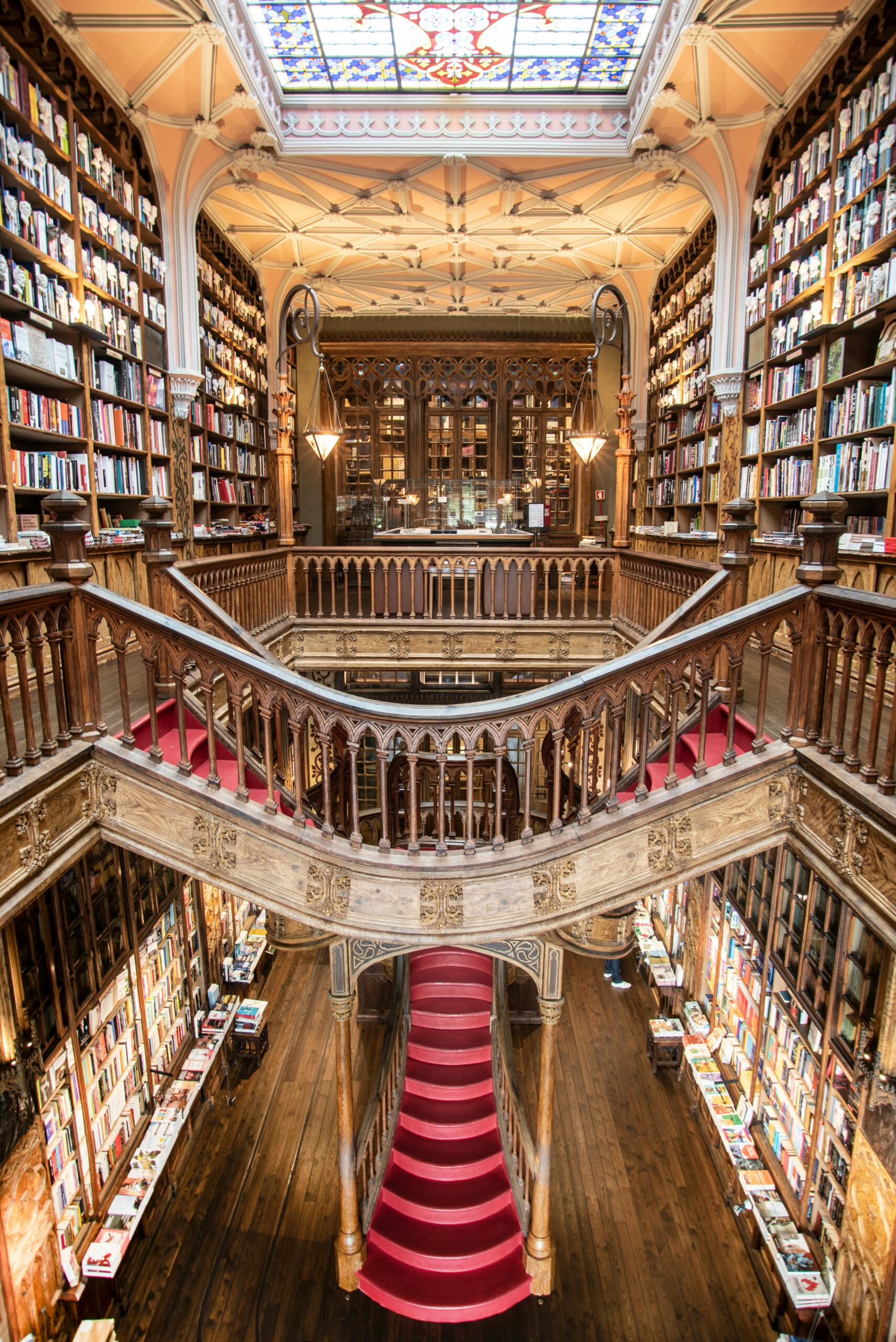
Livraria Lello, a neo-gothic bookshop from 1906, has become a global icon thanks to its scarlet red staircase and painted glass ceiling. Book tickets online the day before (€5, deductible from any book purchase) and arrive at opening to avoid the crowds. The Palácio da Bolsa and especially its Arab Room, a Moorish-inspired masterpiece, deserve a guided one-hour tour.
Don’t miss the Capela das Almas and Igreja do Carmo for their monumental azulejo panels, the Casa da Música for its Rem Koolhaas architecture, and the Serralves Museum for contemporary art and its 18-hectare gardens west of the city. For a more intimate experience, step inside an azulejo workshop in the Miragaia district: certain master ceramists accept private visits that we organise on request.

Vila Nova de Gaia and the port wine cellars
Cross the Dom Luís I bridge via the upper deck (metro + pedestrians) for a breathtaking panorama, then descend to the Gaia quays where the centuries-old cellars line up: Taylor’s, Graham’s, Sandeman, Ferreira, Cálem, Kopke, Ramos Pinto. Each house offers 45-minute to 2-hour visits, paired with tastings of ruby, tawny, white, rosé, colheita or vintage depending on the package (€10 to 35).
Our insider tip: favour one or two outstanding cellars rather than stacking visits. Taylor’s for the beauty of the estate and the view over Porto, Graham’s for the pedagogy and vintages, Ferreira for the story of Dona Antónia, Kopke for rare colheita tawnies. End the day with a sunset on the Jardim do Morro, just above the bridge: it’s free and unforgettable. We curate private tasting tours with a driver and French- or English-speaking sommelier for those who truly want to understand port.
Escapes to the Douro and northern Portugal
Porto is the gateway to the Douro, the first demarcated wine region in the world (1756), a UNESCO site for its schist terraces plunging towards the river. Plan at least one day trip — ideally two — to reach Pinhão, sail for an hour or two on a rabelo boat or small private yacht, and lunch in a family quinta. In September, harvests are still done barefoot in granite lagares: a unique experience to book weeks in advance.
Within an hour of Porto, Guimarães (birthplace of Portugal, UNESCO medieval centre) and Braga (Baroque religious capital) make excellent day escapes. Further north, the Peneda-Gerês national park offers hikes, waterfalls and preserved granite villages. To the west, Matosinhos and Foz do Douro provide beaches, surf and grilled-fish tables. We build combined Porto + Douro + Minho trips over 5 to 8 days for those who really want to discover the region.
Food, drink and local life
Porto is as much to taste as to see. Breakfast at the neighbourhood padaria with a pastel de nata and a bica, lunch in a family tasca (Cantinho do Avillez, Flor dos Congregados, Casa Guedes for the pulled-pork sandwich), afternoon tea at Majestic or under the cherry trees at Serralves, dinner in a starred restaurant (The Yeatman, Euskalduna Studio, Antiqvvm) or around a counter of nortenha tapas. Francesinha, the local specialty of stacked meats, melted cheese and beer sauce, is eaten at lunch — not dinner.
To live Porto at the rhythm of its residents: a fado concert at Café Santiago or Casa da Mariquinhas, aperitifs on the Ribeira terraces or the Gaia rooftops, a match at the Dragão stadium, a morning walk at the restored Bolhão market. On request, we organise private dinners with a chef at home, Portuguese cooking workshops, market visits with a producer, and confidential fado evenings off the tourist trail.
Planning your stay: duration, transport, budget
Ideal duration. Three full days for the essentials (centre + Gaia + one excursion). Five days to add a Douro day and a Guimarães or Braga day. Seven to eight days for a true discovery stay with the Douro in depth, Aveiro, or the north coast.
Transport. Francisco Sá Carneiro airport is connected to the centre in 30 minutes by metro (purple line E, €2.60). In town, everything is done on foot or by metro. Avoid the car in the centre: difficult parking and low-emission zone since 2024. For day trips, the train (to Aveiro, Braga, Guimarães) is comfortable and inexpensive; for the Douro, we recommend a private driver or the train + boat combination.
Indicative budget. Count €90-120 per person per day in 3-4* hotels, €150-200 in 5* or boutique quintas, excluding flights. A meal in a tasca: €15-25. A gastronomic dinner: €70-120. A cellar tasting: €12-30. Porto remains an affordable destination for the level of quality offered.
When to go. April to June and September to October are the best months (18-26 °C, soft light, terraces open). July-August are hot and busy. Winter is mild (10-15 °C) but wetter, with a cosy atmosphere and the lowest rates.
Let us plan your trip to Porto
Planning a bespoke stay in Porto takes time: booking the right cellar, the right table, the right hotel in the right neighbourhood, organising the Douro, anticipating Livraria Lello tickets, finding a reliable English-speaking driver. Our French- and English-speaking agency based in Porto handles it all for you. Discover our bespoke offers, contact us for a personalised stay, or read our story. Reply within 48 h, direct exchange with your concierge, rates negotiated with our local partners.
Frequently asked questions about Porto
How many days do you need to visit Porto?
Three full days are enough to see the essentials (historic centre, Ribeira, Gaia cellars). To include the Douro Valley, Guimarães or Braga, plan five to seven days. Seven to eight days allow a true Porto + northern Portugal stay.
When is the best time to visit Porto?
April-June and September-October offer the best conditions: mild temperatures (64-79 °F), warm light, moderate crowds and open terraces. September is ideal for harvests in the Douro.
Do you need a visa to visit Porto?
No for EU, Swiss and UK citizens (within the 90-day limit). A valid ID card or passport is enough. Portugal is part of the Schengen area.
Porto or Lisbon: which city to choose?
Porto is more intimate, compact, easier to explore on foot. Lisbon is larger, livelier, with a broader cultural and nightlife offer. The ideal is to combine both over 8-10 days, connected by a 3h Alfa Pendular train.
What budget should I plan for a stay in Porto?
Count €90 to 150 per person per day excluding flights, in a comfortable hotel and local restaurants. Porto is 20 to 30% cheaper than Lisbon at equal quality, especially on accommodation.
How to get around Porto?
On foot in the centre (everything fits within a 2 km radius), by metro and historic tram elsewhere. Avoid driving (low-emission zone, difficult parking). The airport is 30 minutes from the centre by metro line E (€2.60).
Can you visit the port cellars without booking?
In low season yes, in high season (June-October) it is strongly recommended to book, especially for guided tours and premium tastings. We organise private tastings with an English-speaking sommelier on request.
Which port cellar to choose in Gaia?
It depends on your tastes. Taylor’s for the beauty of the estate, Graham’s for pedagogy and vintages, Ferreira for Portuguese history, Kopke for rare tawnies, Sandeman for the iconic black cape. One or two well-chosen cellars beat a run of four.
Discover Lisbon and Portugal too
Porto is often the starting point of a wider trip across Portugal. If you plan to combine Porto with Lisbon, our sister agency offers guided tours in Lisbon in English and French with passionate local guides. For group celebrations, explore our hen & stag parties in Lisbon and Porto packages with activities, accommodation and full logistics. Looking for a multi-region trip in Portugal combining the Algarve, Alentejo or Azores? We coordinate the entire stay. On the corporate side, we also organise corporate seminars in Porto and Lisbon, from team-building to bespoke conferences.
Related articles and pages
Go beyond Porto — discover the Azores: For those wanting to explore more of Portugal, the Azores archipelago is an unmissable Atlantic adventure. Our partner agency Secret Azores creates bespoke trips across all nine volcanic islands.